(cross-posted with the Iconic Books blog)
My thanks to my colleagues who made sure I saw the article in The Week from a few days ago, "How Typeface Influences the Way We Read and Think."
The insight here is a helpful one for those interested in materialist questions in the study of Scriptures: namely, that the visual presentation of the words themselves create a psychological effect in the reader, leading to increased credulity (in the case, say, of Georgia) or outright derision (as in the case of Comic Sans).
The only book on the subject of which I am aware is Graphic Design and Bible Reading: Exploratory Studies in the Typographical Representation of the Text of Scripture in Translation, by E. R. Wendland and J. P. Louw. Sadly, it looks like it has gone out of print, though I do have a copy if anyone would like to do some more exploration.
Besides that one text, I have not done much formal study of typefaces in Scripture; but I am pretty sure S. Brent Rodriguez Plate has, and I would love to hear his response to this (and other responses, as well).
Showing posts with label Brent Plate. Show all posts
Showing posts with label Brent Plate. Show all posts
Friday, June 21, 2013

Sunday, June 17, 2012
Typographic Book Covers

You can read the full text of the article here.
The tone of the article is overwhelmingly positive. While it is admitted that an unimaginative design is a detriment whether the cover is imagistic or typographic, Saller also asserts that "Even when the title lacks pizazz, typography can deliver it."
 |
| "Smoke Screen" by Maciunas |
All of this ties in to a small but sturdy volume I picked up at a used bookstore this weekend. The book is called Thinking with Type: A Critical Guide for Designers, Editors, & Students. I haven't had a chance to give it a thorough going-over yet, but looking at its index, Maciunas's name does not appear. His influence, however - through the mashed-up type style and stark use of Helvetica and other sans-serif fonts - is definitely felt.
Certainly Maciunas was not the only one to use this approach. Kurt Schwitters, Russian Constructivists, and the Bauhaus all developed versions of this type-heavy graphic style. Using words as art, with either one or no graphic elements besides, is a long-standing mode of expression.
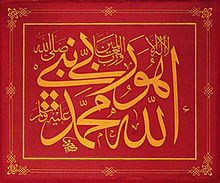
The West, in many respects, is an image-dense culture. It is interesting to see the way in which these text-dense approaches can catch us by surprise or strike us as a novelty. We seem to naturalize the image as the norm, and imagine text as the substrate of our visual lives. As these several examples show, this is hardly the actual case.
Tuesday, December 6, 2011
Call for Papers for a special issue of English Language Notes
The following Call for Papers was passed on to me by S. Brent Rodriguez Plate, president of SCRIPT:
ELN 50.2 (Fall/Winter 2012): “Scriptural Margins: On the Boundaries of Sacred Texts.”
English Language Notes
Contact email: eln2@colorado.edu
Deadline: March 15, 2012
This special issue invites nontraditional examinations of sacred texts from major religious traditions, including those of Judaism, Christianity, Islam, Hinduism, or Buddhism. We seek readings of scriptures that carve out an interpretive space between religious and secular modes of response. Such readings may be informed by recent critical movements – queer theory, affect theory, ontotheology, biopolitics, etc..
They may investigate the usually complex and uncertain process by which a text moves from sacred to secular status (or from sacred back to secular). They may engage the question of how traditional interpretations bend, mutate, or sustain themselves in the wake of cultural changes or political exigencies.
They may examine the dynamic and mutually transformative exchanges between religious hermeneutics and secular modes of interpretation (e.g. legal, literary, psychoanalytic). Papers submitted for this issue may theorize on the relationship between commentaries, treatises and sacred texts - - on the ways, for example, that commentaries enter into the historical lives of scriptures, inscribing them with meanings that become naturalized. Or they may explore the paths by which scripture flows into non-scriptural writings -- poetry, fiction, or song – and how such paths reconfigure or coexist with the division between a sacred and a non-sacred text. Or they may track the fate of a sacred text as it moves across cultural and geographical boundaries, finding new communities of believers and generating new readings, whether as recognitions or misrecognitions of the readings adopted by preceding schools of believers. In all cases, contributors will be motivated by a desire to operate outside the engrained opposition between religious and secular discourses and by the desire for a mode of reading that isn’t reducible to spiritual or anti-spiritual programs, to immediately recognizable acts of heterodoxy or piety. Consideration will be given to critical essays, creative writings, and to writings that are combinations of the two. We also welcome round-table discussions on particular sub-topics and reviews or review articles of recent books relevant to the issue’s theme.
Please send double-spaced, 12-point font contributions adhering to the Chicago-style endnote citation format in hard copy and on CD-ROM to the address below:
Special Issue Editor, “Scriptural Margins”
English Language Notes
University of Colorado at Boulder
226 UCB
Boulder, CO 80309-0226
Specific inquiries may be addressed to the issue editor, Sue Zemka, zemka@colorado.edu. The deadline for submissions for the first issue is March 15, 2012
Thursday, June 17, 2010
From Brent Plate, Editor of the Encyclopdia of the Bible and Its Reception
[I just received this email from Brent. If you have interest in writing an entry from the list below, please contact him directly]
Dear all,
Dear all,
After several transitions (in personnel and technology), de Gruyter's Encyclopedia of the Bible and its Reception is moving full steam ahead. I have immediate need for several entries, all due in the next couple weeks. I am looking for entries (lengths of 250-2000 words, negotiable depending on importance of entry) on the reception of the bible with regard the topics listed below:
Day of Judgement
Death, Dying
Deborah
Delilah
Deluge
Demons, Demonology
Descent into the Netherworld/Hell
Devil
Disney, Walt
Dormition and Assumption of Mary
Dove
Drama
After that, the "E" entries will begin. A new list will come around soon with those entries. If you have any interest in writing on topics beginning with "E" and beyond, do let me know.
with best wishes,
Brent Plate
* * * * * * * * *
S Brent Rodriguez Plate
Visiting Associate Professor of Religious Studies
Hamilton College
198 College Hill Rd
Clinton, NY 13323
p] 315.859.4587
f] 315.859.4390
Thursday, May 27, 2010
Call for Entries for the Encyclopedia of the Bible and its Reception
[I recently received the following information from Brent Plate, editor of the Material Religion journal and one of the editors of this Encyclopedia project. Please consider contributing to this valuable effort!]
Walter de Gruyter Publishing House in Berlin, having recently finished the Theologische Realenzyklopädie (TRE), is now publishing an equally ambitious research tool – an Encyclopedia of the Bible and Its Reception (EBR) in 30 volumes. Volumes 1 and 2 were published in 2009, and volumes 3-6 are currently in production for 2010 publication.
EBR will be published in English and will be the first comprehensive biblical research tool to incorporate fully the history of interpretation and reception into an encyclopedic treatment of the Bible. This project will shape future scholarship on the Bible and its cultural and historical reception. EBR will, on the one hand, trace in comprehensive detail the impact of historical persons, places, topics, etc. on the Bible, and, on the other hand, the reception of the Bible, i.e. the reception of biblical books, persons, places, flora and fauna, pericopes, topics, motifs etc. in the history of Christianity, Judaism, Islam, other world religions, literature, visual arts, music, theater and film.
There are ongoing opportunities for publishing shorter (~200 words), longer (~2000 words), and in-between, entries on topics related to religion and film. 2010 begins the entries beginning with the letter "D."
To give example of the range of topics covered, previous entries on film include:
-Abraham
-Angels
-Atheism
-Blasphemy
-Buñuel
-Cain
-Celibacy
-Chaos
-Desert
There are many more entries, but this gives a sense of the range of interests: specific directors, specific films, general biblical topics, and biblical characters and motifs.
For further information, questions, and for examples of already published entries, please contact Brent Plate: splate@hamilton.edu
Tuesday, May 18, 2010
Panel proposal on "Material Scripture" accepted by AAR
I am happy to report that the panel we have proposed to discuss the growing fields of "Material Scripture" and "Iconic Books" has been accepted. We will be presenting the panel during the Sunday "wildcard" sessions at the American Academy of Religion conference this fall in Atlanta (October 30 - November 2).
The one update of note at this point is that Brent Plate, with regret, has withdrawn his paper, as he has received a grant to study material religious culture in Japan that will take him out of the country during the dates of the conference. We have just confirmed that James S. Bielo, author of Words upon the Word: An Ethnography of Evangelical Group Bible Study , will take Brent's place on the panel.
I will post more updates as they are available. Meanwhile, if you plan to be at the conference, or in the area, please make plans to attend. It's going to be a great discussion!
The one update of note at this point is that Brent Plate, with regret, has withdrawn his paper, as he has received a grant to study material religious culture in Japan that will take him out of the country during the dates of the conference. We have just confirmed that James S. Bielo, author of Words upon the Word: An Ethnography of Evangelical Group Bible Study
, will take Brent's place on the panel.I will post more updates as they are available. Meanwhile, if you plan to be at the conference, or in the area, please make plans to attend. It's going to be a great discussion!
Tuesday, March 9, 2010
American Academy of Religion proposal for a panel to discuss Material Scripture
The following is the text of the proposal we turned in this week to the AAR. We are hopeful the committee will pick it up and let us do the panel. Keep fingers crossed.
From well before the advent of movable-type printing techniques, the Holy Bible has been a marketed object. This fact has only become more apparent in recent decades, with the rise of Bibles increasingly tailored to demographics and identity.
This panel will explore the physical forms that Scripture takes, as it is presented to readers in various iterations as a printed artifact. Thus the phrase, “Material Scripture,” describes a practice of inquiry that seeks to examine the culture of mass-market Bibles in North America by analyzing the Bibles themselves.
Raymond Williams’s argument, that “we cannot separate literature and art from other kinds of social practice, in such a way as to make them subject to quite special and distinct laws,” became the kernel for a method of literary criticism known as “cultural materialism.” This method, most visibly applied to the field of Shakespeare studies through the publication of Dollimore and Sinfeld’s Political Shakespeare (1985), has been adopted, and adapted, in recent years by a group of biblical scholars and theologians. Working under a variety of names, including “Iconic Books,” “Material Religion” and “Material Scripture,” these scholars are creating an international dialogue as to the various methodologies and practicalities of this “materialist” approach to biblical criticism.
This panel proposes to draw together several of the active scholars in this growing field of inquiry. We are at a point where it is appropriate that our discussions have a wider level of participation and become more public. Thus we are proposing this panel as a forum for a series of differing but complementary examples of “materialist” approaches to scripture.
A mass-produced Bible is both highly designed and, to an ever-increasing degree, a “designer” object. Published Bibles that reflect the demographics of certain aspects of American culture and lifestyle preferences are becoming prevalent in the marketplace, and this trend is not necessarily well addressed by the current methods of biblical criticism. In this panel, Brent Plate, Timothy Beal, and David Dault will offer varying perspectives on a more “materialist” approach to the printed Bible. These explorations of the physicality and genealogy of printed Bibles open up avenues of ideological and theological critique that stretch far back into the history of modern versions of Scripture and into the history of Western print culture itself. Dori Parmenter will respond, and James Watts will chair the proceedings.
The panelists, and their projects, are as follows:
S. Brent Rodriguez Plate (Hamilton College), “Looking at Words” – Typeface and page design matters. The matter (i.e., materiality and thus visuality) of words is as important as the semantics of them. “The Word” in Gothic font means one thing. “The Word” in Helvetica means something quite different. The presentation includes two key points. First, printed words are images, and the so-called Word-Image split ignores the visuality of script, typeface, and layout. Second, interpretation is emotional and affective. There can then be no clear-cut distinction between the semantic dimensions of texts and the iconic and performative dimensions. The rationality of semantics is not separable from the experiential appearance of words. They impact us emotionally, rationally, and, usually, subliminally.
Timothy K. Beal (Case Western Reserve University), “The Materiality of the Bible as Icon” – This multimedia presentation will incorporate a series of cultural representations of the Bible. The initial part of the presentation will involve a montage of images from film and video that demonstrate how the physical presence of the Bible in such representations can function in a totemic or iconic fashion. A brief theoretical reflection upon and discussion of the montage will follow. In this discussion, Beal will examine how the “cultural iconicity” of the Bible seems to be able to contain the plural materialities of Scripture — and how far that iconicity can be stretched to include new and radically different material forms.
David Dault (Christian Brothers University), “From Cultural Materialism to Material Scripture: Developing a Functional Methodology” – This paper will take a step back from the practices of material criticism represented by the first two papers, and offer an analysis of the developing process of material biblical criticism. “Material Scripture” will be presented as an ethically based ideological critique of the practice of"embedding" theologies and hermeneutic guidance into the visual and paratextual corpus of published Bibles, and some initial methodologies for its practice will be identified.
Response to the presentations will come from Dori Parmenter (Spalding University), and the session will be chaired by James Watts (Syracuse University), both of whom have worked in developing the “Iconic Scriptures” project, based at Syracuse University, which has approached a similar range of concerns with a different set of methodologies and assumptions. The inclusion of this alternative approach will, it is hoped, lead to a rich and generative discussion of the wider issues at stake in these disparate approaches to scripture.
Abstract
A mass-produced Bible is both highly designed and, to an ever-increasing degree, a “designer” object. Published Bibles that reflect the demographics of certain aspects of American culture and lifestyle preferences are becoming prevalent in the marketplace, and this trend is not necessarily well addressed by the current methods of biblical criticism. In this panel, Brent Plate, Timothy Beal, and David Dault will offer varying perspectives on a more “materialist” approach to the printed Bible. These explorations of the physicality and genealogy of printed Bibles open up avenues of ideological and theological critique that stretch far back into the history of modern versions of Scripture and into the history of Western print culture itself. Dori Parmenter will respond and James Watts will chair the session.
From well before the advent of movable-type printing techniques, the Holy Bible has been a marketed object. This fact has only become more apparent in recent decades, with the rise of Bibles increasingly tailored to demographics and identity.
This panel will explore the physical forms that Scripture takes, as it is presented to readers in various iterations as a printed artifact. Thus the phrase, “Material Scripture,” describes a practice of inquiry that seeks to examine the culture of mass-market Bibles in North America by analyzing the Bibles themselves.
Raymond Williams’s argument, that “we cannot separate literature and art from other kinds of social practice, in such a way as to make them subject to quite special and distinct laws,” became the kernel for a method of literary criticism known as “cultural materialism.” This method, most visibly applied to the field of Shakespeare studies through the publication of Dollimore and Sinfeld’s Political Shakespeare (1985), has been adopted, and adapted, in recent years by a group of biblical scholars and theologians. Working under a variety of names, including “Iconic Books,” “Material Religion” and “Material Scripture,” these scholars are creating an international dialogue as to the various methodologies and practicalities of this “materialist” approach to biblical criticism.
This panel proposes to draw together several of the active scholars in this growing field of inquiry. We are at a point where it is appropriate that our discussions have a wider level of participation and become more public. Thus we are proposing this panel as a forum for a series of differing but complementary examples of “materialist” approaches to scripture.
A mass-produced Bible is both highly designed and, to an ever-increasing degree, a “designer” object. Published Bibles that reflect the demographics of certain aspects of American culture and lifestyle preferences are becoming prevalent in the marketplace, and this trend is not necessarily well addressed by the current methods of biblical criticism. In this panel, Brent Plate, Timothy Beal, and David Dault will offer varying perspectives on a more “materialist” approach to the printed Bible. These explorations of the physicality and genealogy of printed Bibles open up avenues of ideological and theological critique that stretch far back into the history of modern versions of Scripture and into the history of Western print culture itself. Dori Parmenter will respond, and James Watts will chair the proceedings.
The panelists, and their projects, are as follows:
S. Brent Rodriguez Plate (Hamilton College), “Looking at Words” – Typeface and page design matters. The matter (i.e., materiality and thus visuality) of words is as important as the semantics of them. “The Word” in Gothic font means one thing. “The Word” in Helvetica means something quite different. The presentation includes two key points. First, printed words are images, and the so-called Word-Image split ignores the visuality of script, typeface, and layout. Second, interpretation is emotional and affective. There can then be no clear-cut distinction between the semantic dimensions of texts and the iconic and performative dimensions. The rationality of semantics is not separable from the experiential appearance of words. They impact us emotionally, rationally, and, usually, subliminally.
Timothy K. Beal (Case Western Reserve University), “The Materiality of the Bible as Icon” – This multimedia presentation will incorporate a series of cultural representations of the Bible. The initial part of the presentation will involve a montage of images from film and video that demonstrate how the physical presence of the Bible in such representations can function in a totemic or iconic fashion. A brief theoretical reflection upon and discussion of the montage will follow. In this discussion, Beal will examine how the “cultural iconicity” of the Bible seems to be able to contain the plural materialities of Scripture — and how far that iconicity can be stretched to include new and radically different material forms.
David Dault (Christian Brothers University), “From Cultural Materialism to Material Scripture: Developing a Functional Methodology” – This paper will take a step back from the practices of material criticism represented by the first two papers, and offer an analysis of the developing process of material biblical criticism. “Material Scripture” will be presented as an ethically based ideological critique of the practice of"embedding" theologies and hermeneutic guidance into the visual and paratextual corpus of published Bibles, and some initial methodologies for its practice will be identified.
Response to the presentations will come from Dori Parmenter (Spalding University), and the session will be chaired by James Watts (Syracuse University), both of whom have worked in developing the “Iconic Scriptures” project, based at Syracuse University, which has approached a similar range of concerns with a different set of methodologies and assumptions. The inclusion of this alternative approach will, it is hoped, lead to a rich and generative discussion of the wider issues at stake in these disparate approaches to scripture.
Abstract
A mass-produced Bible is both highly designed and, to an ever-increasing degree, a “designer” object. Published Bibles that reflect the demographics of certain aspects of American culture and lifestyle preferences are becoming prevalent in the marketplace, and this trend is not necessarily well addressed by the current methods of biblical criticism. In this panel, Brent Plate, Timothy Beal, and David Dault will offer varying perspectives on a more “materialist” approach to the printed Bible. These explorations of the physicality and genealogy of printed Bibles open up avenues of ideological and theological critique that stretch far back into the history of modern versions of Scripture and into the history of Western print culture itself. Dori Parmenter will respond and James Watts will chair the session.
Subscribe to:
Posts (Atom)


