(cross-posted with the Iconic Books blog)
My thanks to my colleagues who made sure I saw the article in The Week from a few days ago, "How Typeface Influences the Way We Read and Think."
The insight here is a helpful one for those interested in materialist questions in the study of Scriptures: namely, that the visual presentation of the words themselves create a psychological effect in the reader, leading to increased credulity (in the case, say, of Georgia) or outright derision (as in the case of Comic Sans).
The only book on the subject of which I am aware is Graphic Design and Bible Reading: Exploratory Studies in the Typographical Representation of the Text of Scripture in Translation, by E. R. Wendland and J. P. Louw. Sadly, it looks like it has gone out of print, though I do have a copy if anyone would like to do some more exploration.
Besides that one text, I have not done much formal study of typefaces in Scripture; but I am pretty sure S. Brent Rodriguez Plate has, and I would love to hear his response to this (and other responses, as well).
Showing posts with label Bible design. Show all posts
Showing posts with label Bible design. Show all posts
Friday, June 21, 2013

Sunday, June 17, 2012
Typographic Book Covers

You can read the full text of the article here.
The tone of the article is overwhelmingly positive. While it is admitted that an unimaginative design is a detriment whether the cover is imagistic or typographic, Saller also asserts that "Even when the title lacks pizazz, typography can deliver it."
 |
| "Smoke Screen" by Maciunas |
All of this ties in to a small but sturdy volume I picked up at a used bookstore this weekend. The book is called Thinking with Type: A Critical Guide for Designers, Editors, & Students. I haven't had a chance to give it a thorough going-over yet, but looking at its index, Maciunas's name does not appear. His influence, however - through the mashed-up type style and stark use of Helvetica and other sans-serif fonts - is definitely felt.
Certainly Maciunas was not the only one to use this approach. Kurt Schwitters, Russian Constructivists, and the Bauhaus all developed versions of this type-heavy graphic style. Using words as art, with either one or no graphic elements besides, is a long-standing mode of expression.
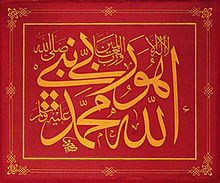
The West, in many respects, is an image-dense culture. It is interesting to see the way in which these text-dense approaches can catch us by surprise or strike us as a novelty. We seem to naturalize the image as the norm, and imagine text as the substrate of our visual lives. As these several examples show, this is hardly the actual case.
Thursday, May 10, 2012
Report from Eastern International Region SCRIPT Conference
This is the second year that SCRIPT has held a meeting concurrently with the Eastern International Regional meeting of the AAR. Last year we met at Syracuse University. This year's meeting was held at Waterloo University, outside Toronto.
We had a slightly smaller footprint at this year's conference. Instead of several sessions, we had one. Despite the small size, however, it was well-attended, and the conversation was quite lively.
The following presentations were part of the session:
Jim Watts's paper builds on the thesis he first put forth in his earlier paper, “The Three Dimensions of Scriptures.” In his discussion, Watts argues that a "Relic" text can be understood as a text where the iconic dimension has been hyper-emphasized, and the other two dimensions (the semantic and performative dimensions) have been largely or wholly eclipsed. He had a good supply of examples, from the Declaration of Independence on display in Washington, D.C. to several kinds of Bibles that are designed to be seen, but not read.
Karl Solibakke's paper attempted to bring the questions of Iconic Books into conversation with Walter Benjamin's corpus, particularly around the Benjaminian concept of the "script." According the the website of the International Walter Benjamin Society, "The term 'Script' (Schrift) emerges in the 1920’s as the center around which Benjamin’s meditations on the relationship between writing and image crystallize," and refers specifically to the act of writing as a graphic event, and not merely a textual one. Solibakke's paper added a rich dimension to the discussion that followed the three papers.
Despite our only having one session this year, we managed to attract a number of interested persons to the session, with some even pledging to join SCRIPT as a result. After the session, the participants and many of the attendees departed to the evening reception where, despite a loud jazz band, good conversation and conviviality lasted well into the night.
We had a slightly smaller footprint at this year's conference. Instead of several sessions, we had one. Despite the small size, however, it was well-attended, and the conversation was quite lively.
The following presentations were part of the session:
- David Dault, Christian Brothers University: "On a Controlled Bibliographic Vocabulary for SCRIPT and its Related Organizations: A Response to Deirdre Stam"
- James W. Watts, Syracuse University: "Relic Books"
- Karl Ivan Solibakke, Syracuse University: "Identity, Mimesis and Script: Walter Benjamin's Mimetic Function Revisited"
Jim Watts's paper builds on the thesis he first put forth in his earlier paper, “The Three Dimensions of Scriptures.” In his discussion, Watts argues that a "Relic" text can be understood as a text where the iconic dimension has been hyper-emphasized, and the other two dimensions (the semantic and performative dimensions) have been largely or wholly eclipsed. He had a good supply of examples, from the Declaration of Independence on display in Washington, D.C. to several kinds of Bibles that are designed to be seen, but not read.
Karl Solibakke's paper attempted to bring the questions of Iconic Books into conversation with Walter Benjamin's corpus, particularly around the Benjaminian concept of the "script." According the the website of the International Walter Benjamin Society, "The term 'Script' (Schrift) emerges in the 1920’s as the center around which Benjamin’s meditations on the relationship between writing and image crystallize," and refers specifically to the act of writing as a graphic event, and not merely a textual one. Solibakke's paper added a rich dimension to the discussion that followed the three papers.
Despite our only having one session this year, we managed to attract a number of interested persons to the session, with some even pledging to join SCRIPT as a result. After the session, the participants and many of the attendees departed to the evening reception where, despite a loud jazz band, good conversation and conviviality lasted well into the night.
Wednesday, January 25, 2012
A short note about a typeface (Caslon, specifically)
I just received my copy of the Commonweal Associates Newsletter, an occasional publication for supporters of Commonweal magazine. In amongst the other news items was the following:
This assertion--that a "weighty" magazine demands a "weighty" typeface--is likely one we don't often think too much about. It brought to my mind a wonderful little book by E.R. Wendland and J.P. Louw, Graphic Design and Bible Reading, wherein they remind us that, "in the end, format does have meaning and people will assign a certain sense to the lay-out of a text according to how they happen to perceive it and interpret it" [37].
A typeface communicates more than just the words for which it is employed. It communicates a character, added-to those words. Erik Spiekermann, in his foundational Stop Stealing Sheep & Find Out How Type Works, makes clear that this type-character is expected to be a good match for the genre and purpose of the printed text. "Just as business people are expected to wear a suit (plus, naturally, a shirt and tie), text set for business has to look fairly serious and go about its purpose in an inconspicuous, well-organized way" [65]. Following this logic, it is only natural that "weighty" magazines are expected to sport "weighty" fonts. Serious is as serious does, after all.
Needless to say, I found it quite delightful that a magazine staff would actually come out and admit the rationale for choosing one typeface over another. While these decisions are invariably made with deliberation and care, it is not so often we get a glimpse behind the scenes into the machinations.
After redesigning the magazine in 2005, we fielded a good deal of compliments--and complaints. Reader response was mostly positive, but even fans of the revised look wondered whether the new typeface wasn't a touch too light. Well, as Jesus taught, ask and you shall receive, within at least six years. Our new new typeface, which debuted in the fall, is Caslon. It replaces the thinner-cut Goudy in headlines and body copy. You may recognize it from a little-known periodical called the New Yorker. If you haven't noticed, don't panic--the change is subtle. But important. A magazine as weighty as Commonweal ought not be printed in too light a typeface.
This assertion--that a "weighty" magazine demands a "weighty" typeface--is likely one we don't often think too much about. It brought to my mind a wonderful little book by E.R. Wendland and J.P. Louw, Graphic Design and Bible Reading,
wherein they remind us that, "in the end, format does have meaning and people will assign a certain sense to the lay-out of a text according to how they happen to perceive it and interpret it" [37].A typeface communicates more than just the words for which it is employed. It communicates a character, added-to those words. Erik Spiekermann, in his foundational Stop Stealing Sheep & Find Out How Type Works,
makes clear that this type-character is expected to be a good match for the genre and purpose of the printed text. "Just as business people are expected to wear a suit (plus, naturally, a shirt and tie), text set for business has to look fairly serious and go about its purpose in an inconspicuous, well-organized way" [65]. Following this logic, it is only natural that "weighty" magazines are expected to sport "weighty" fonts. Serious is as serious does, after all.Needless to say, I found it quite delightful that a magazine staff would actually come out and admit the rationale for choosing one typeface over another. While these decisions are invariably made with deliberation and care, it is not so often we get a glimpse behind the scenes into the machinations.
Thursday, January 19, 2012
Article in Christianity Today about the physical forms of Bibles
David Neff, editor-in-chief of Christianity Today, has penned a brief article about the effects the physical forms of Bibles have on readers:
 shed the first American Bible to contain genealogical pages -- the piece actually has very little to say about what it promises in its title: the effects of physical Bible forms on reading.
What an article like this shows is exactly the importance of work like what is going on with the Iconic Books project and here at Material Scripture. We need a language and a means of analysis that actually can track these effects of physical form when we notice them. Hopefully this article at Christianity Today is not just a flash in the pan, and Neff and others will begin to take an ongoing interest in these questions (and their answers)!
(Thanks to Allyn Harris Dault for sending me the CT article)
The physical form of the Bible matters because it influences the way Christians use their sacred book. In the countercultural 1960s, for example, publishers shucked the black leather uniform in favor of more contemporary dress. The aim was to reach those who might not otherwise pick up the Scriptures. The American Bible Society's Good News for Modern Man resembled a mass market paperback, and Tyndale House's Reach Out: The Living New Testament looked just plain "groovy."While it is an informative article about some of the little-known facts of the history of Bible publishing and use -- for example, you might not have known that it was in 1791 that Isaiah Thomas publi
 shed the first American Bible to contain genealogical pages -- the piece actually has very little to say about what it promises in its title: the effects of physical Bible forms on reading.
What an article like this shows is exactly the importance of work like what is going on with the Iconic Books project and here at Material Scripture. We need a language and a means of analysis that actually can track these effects of physical form when we notice them. Hopefully this article at Christianity Today is not just a flash in the pan, and Neff and others will begin to take an ongoing interest in these questions (and their answers)!
(Thanks to Allyn Harris Dault for sending me the CT article)
Tuesday, January 17, 2012
New York Times features A.-J. Levine, Jewish Annotated New Testament
I just saw a New York Times article, published back in late November 2011, that features Amy-Jill Levine and focuses on the new Jewish Annotated New Testament :
:
:This volume is thus for anybody interested in a Bible more attuned to Jewish sources. But it is of special interest to Jews who “may believe that any annotated New Testament is aimed at persuasion, if not conversion,” Drs. Levine and Brettler write in their preface. “This volume, edited and written by Jewish scholars, should not raise that suspicion.”The article balances both commentary about Levine's lifelong interest in New Testament, as well as the current culture of Bible publication, with its preoccupation with "lifestyle" themed editions.
Wednesday, January 4, 2012
"A Bible with an Appendix": Christophe Plantin's 1573 Polyglot Bible
Over the past couple of weeks my wife and I have been watching the much loved Connections series, put together by James Burke for the BBC in the 1970s and 1990s. The whole series is now available for free online, and I highly recommend it if you haven't seen it. Burke reads historical events thematically, instead of chronologically, leading to some truly fascinating leaps and threads that start one place and, by the end of the program, pull together across cultures and centuries in surprising and very satisfying ways.
The episode we watched last night had this little section about the Belgian printer Christophe Plantin, who is famous for his ambitious work producing a "Polyglot Bible" - eight volumes that incorporated five languages (Hebrew, Greek, Latin, Aramaic, and Syriac), with the last two volumes comprised entirely of grammars, lexicographic aids, charts, lists, and maps. It is an absolutely amazing piece of work, and garnered Plantin much praise (and a little bit of trouble) for his efforts.
Here is the video. Enjoy!
The episode we watched last night had this little section about the Belgian printer Christophe Plantin, who is famous for his ambitious work producing a "Polyglot Bible" - eight volumes that incorporated five languages (Hebrew, Greek, Latin, Aramaic, and Syriac), with the last two volumes comprised entirely of grammars, lexicographic aids, charts, lists, and maps. It is an absolutely amazing piece of work, and garnered Plantin much praise (and a little bit of trouble) for his efforts.
Here is the video. Enjoy!
Monday, December 26, 2011
A "Natural History of the Book": Joshua Calhoun's "The Word Made Flax"
A few months ago my colleague Katy Scrogin passed along to me an article for the MLA Journal. I've been meaning to comment on it for some time now, as I found it thought-provoking and, at many points, exquisite.
Joshua Calhoun's "The Word Made Flax: Cheap Bibles, Textual Corruption, and the Poetics of Paper" [PMLA 126.2 (March 2011): 327-344] takes as its central concern the question of "a printed Bible made of culturally processed natural resources, a Bible that is a palimpsest of plants and animals, social circulation, religious tradition and textual production" [341]. Calhoun's thesis is that Bibles throughout the history of their production have carried in their physical forms the traces of the materials and conditions from which they were produced. Moreover, Calhoun finds clear evidence that readers through the ages have been quite adept at decoding these markings of material provenance, and using that knowledge as part of a rhetoric of interpretation.
To demonstrate his point, Calhoun offers a reading of a 1655 poem by Henry Vaughn, "The Book," which "engages in sixteenth- and seventeenth-century debates about cheap media and the production of a vernacular Bible in England" [329]. Take, for example, the following lines from the second stanza of "The Book":
"Like many seventeenth-century readers," Calhoun explains, Vaughn "still lives in close proximity to the materials that make his paper" [337]. Unlike the paper stocks of today, made primarily of wood pulp, the linen papers of Vaughn's day were made primarily of rags--that is to say, they consisted of well-worn, cast-off garments. "Vaughn, like his contemporaries, comprehended the natural origins of paper and understood that flax had to be literally inhabited--broken in as clothing--before it could be used in papermaking" [333].
Calhoun demonstrates that this close proximity to the life-cycle of paper made readers like Vaughn highly attuned not only to the provenance of books, but moreover to the relative qualities of paper employed in fashioning those books. In the sixteenth- and seventeenth-centuries Bibles (for demonstrably economic reasons) began to be printed on cheaper and cheaper grades of paper. Calhoun observes that "scholars have focused on the increased portability, distribution, and ownership of cheaper Bibles. What tend to be overlooked, at least in current criticism," he continues," are the rhetorical effects of the surfaces on which words appear" [328].
Drawing not only on his masterful reading of Vaughn, but also contemporaneous critics who despaired that the words of God were now to be found printed on thin papers far inferior to papers on which Shakespeare's plays were printed, Calhoun makes a well-supported claim that the rhetorical effect of printing cheaper Bibles was often to cheapen the reverence for the Bible itself. "[T]he Protestant Reformation made the Bible--and, by extension, other books--more vulgar" [328]. The Bible was now literally in the hands of the readers, graspable, and "graspability had interpretive consequences" [328].
"Examining the poetics of paper in Renaissance English texts, I assert the value of a critical approach that accounts for the rhetorical effects of what might be called a 'natural history of the book,'" Calhoun states. Upon reading his article, I was struck by the similarities that exist between his "natural history of the book," arising out of the disciplines of English literary criticism and bibliographic studies, and my own concerns of "material scripture," which arise out of the disciplines of theology and biblical criticism.
I recently contacted Joshua Calhoun, who is at present finishing his dissertation in English at the University of Delaware, Newark. He was very receptive to my description of what SCRIPT is up to, and I am pleased to report that he was quick to see the similarities in our methodologies, and very open to staying in contact and perhaps getting involved in some of the work we do at the conference level. We have made a first foray into cross-disciplinary conversation. I am hopeful that others who read this blog, and who are involved in the Iconic Books conversations and SCRIPT, will also begin to engage Calhoun's work (out of privacy and spam concerns, please get in touch with me directly for contact information). I have no doubt that he will be an excellent and valuable interlocutor as these conversations move forward.
Joshua Calhoun's "The Word Made Flax: Cheap Bibles, Textual Corruption, and the Poetics of Paper" [PMLA 126.2 (March 2011): 327-344] takes as its central concern the question of "a printed Bible made of culturally processed natural resources, a Bible that is a palimpsest of plants and animals, social circulation, religious tradition and textual production" [341]. Calhoun's thesis is that Bibles throughout the history of their production have carried in their physical forms the traces of the materials and conditions from which they were produced. Moreover, Calhoun finds clear evidence that readers through the ages have been quite adept at decoding these markings of material provenance, and using that knowledge as part of a rhetoric of interpretation.
To demonstrate his point, Calhoun offers a reading of a 1655 poem by Henry Vaughn, "The Book," which "engages in sixteenth- and seventeenth-century debates about cheap media and the production of a vernacular Bible in England" [329]. Take, for example, the following lines from the second stanza of "The Book":
[God] knew'st this papyr, when it was
Meer seed, and after that but grass;
Before 'twas drest or spun, and when
Made linen, who did wear it then:
What were their lifes, their thoughts & deeds
Whither good corn, or fruitless weeds [329].
"Like many seventeenth-century readers," Calhoun explains, Vaughn "still lives in close proximity to the materials that make his paper" [337]. Unlike the paper stocks of today, made primarily of wood pulp, the linen papers of Vaughn's day were made primarily of rags--that is to say, they consisted of well-worn, cast-off garments. "Vaughn, like his contemporaries, comprehended the natural origins of paper and understood that flax had to be literally inhabited--broken in as clothing--before it could be used in papermaking" [333].
Calhoun demonstrates that this close proximity to the life-cycle of paper made readers like Vaughn highly attuned not only to the provenance of books, but moreover to the relative qualities of paper employed in fashioning those books. In the sixteenth- and seventeenth-centuries Bibles (for demonstrably economic reasons) began to be printed on cheaper and cheaper grades of paper. Calhoun observes that "scholars have focused on the increased portability, distribution, and ownership of cheaper Bibles. What tend to be overlooked, at least in current criticism," he continues," are the rhetorical effects of the surfaces on which words appear" [328].
Drawing not only on his masterful reading of Vaughn, but also contemporaneous critics who despaired that the words of God were now to be found printed on thin papers far inferior to papers on which Shakespeare's plays were printed, Calhoun makes a well-supported claim that the rhetorical effect of printing cheaper Bibles was often to cheapen the reverence for the Bible itself. "[T]he Protestant Reformation made the Bible--and, by extension, other books--more vulgar" [328]. The Bible was now literally in the hands of the readers, graspable, and "graspability had interpretive consequences" [328].
"Examining the poetics of paper in Renaissance English texts, I assert the value of a critical approach that accounts for the rhetorical effects of what might be called a 'natural history of the book,'" Calhoun states. Upon reading his article, I was struck by the similarities that exist between his "natural history of the book," arising out of the disciplines of English literary criticism and bibliographic studies, and my own concerns of "material scripture," which arise out of the disciplines of theology and biblical criticism.
I recently contacted Joshua Calhoun, who is at present finishing his dissertation in English at the University of Delaware, Newark. He was very receptive to my description of what SCRIPT is up to, and I am pleased to report that he was quick to see the similarities in our methodologies, and very open to staying in contact and perhaps getting involved in some of the work we do at the conference level. We have made a first foray into cross-disciplinary conversation. I am hopeful that others who read this blog, and who are involved in the Iconic Books conversations and SCRIPT, will also begin to engage Calhoun's work (out of privacy and spam concerns, please get in touch with me directly for contact information). I have no doubt that he will be an excellent and valuable interlocutor as these conversations move forward.
Sunday, December 11, 2011
Call for Papers - "From Text(s) to Book(s)" - International conference
CALL FOR PAPERS
An international and SHARP-sponsored conference
‘From Text(s) to Book(s)’
21-23 June 2012
Nancy-Université (Université de Lorraine from Jan. 2012), France
Deadline for proposals: 15 December 2011
I.D.E.A. (‘Théories et pratiques de l’Interdisciplinarité Dans les Etudes Anglophones’ / Interdisciplinarity in English Studies), the research group of the Nancy-Université English Department, will be hosting an international and SHARP-sponsored conference on the subject ‘From Text(s) to Book(s)’. This conference will provide a forum to discuss the ways in which texts are materialised for consumption by the reading public, both historically and in the contemporary context.
Full call for papers can be found here. Conference website is here.
An international and SHARP-sponsored conference
‘From Text(s) to Book(s)’
21-23 June 2012
Nancy-Université (Université de Lorraine from Jan. 2012), France
Deadline for proposals: 15 December 2011
I.D.E.A. (‘Théories et pratiques de l’Interdisciplinarité Dans les Etudes Anglophones’ / Interdisciplinarity in English Studies), the research group of the Nancy-Université English Department, will be hosting an international and SHARP-sponsored conference on the subject ‘From Text(s) to Book(s)’. This conference will provide a forum to discuss the ways in which texts are materialised for consumption by the reading public, both historically and in the contemporary context.
Full call for papers can be found here. Conference website is here.
Wednesday, November 9, 2011
Make a wish...
The other day my friend Maria and I were discussing what she called the "Magic 8 Ball" approach to the Bible - basically where you express magical thinking by assuming that whenever you open a Bible randomly, it will answer your question and tell you what to do.
So I was very pleased to run across this cartoon by David Hayward this morning:

You can see this image in its original post, and see other works by Hayward, by clicking here.
So I was very pleased to run across this cartoon by David Hayward this morning:

You can see this image in its original post, and see other works by Hayward, by clicking here.
Saturday, November 5, 2011
Distinguished Bible scholar Jack Lewis writing on the KJV's legacy
 Jack P. Lewis, professor emeritus of Harding School of Theology here in Memphis, has written a short article about the legacy of the KJV, which appeared online this morning on the Commercial Appeal's "Faith in Memphis" website.
The article offers an overview of the history -- and some of the misconceptions -- that surround the provenance of the "Authorized Version":
King James was not a translator. History records no financial contribution by King James to the preparation, nor any official act of approval by King or church. Nevertheless, the KJV has been known as the Authorized Version, meaning it was authorized for use by the Anglican Church. Bible printing in England was a royal monopoly. In America, there is no organization to authorize for Christendom.Lewis points out as well that, contrary to popular belief, the KJV was in fact the ninth version of the Bible to appear in English, following on the efforts of Tyndale and earlier versions such as the Bishop's Bible and even the Catholic Douay-Rheims.
Lewis also points out that the KJV, though highly esteemed by many, is by no means a perfect translation, particularly for contemporary readers. "The English language also has changed dramatically so that the KJV has 800 words that have changed their meaning. Some like 'prevent' or 'let' now have the opposite meaning."
I had the chance to meet Dr. Lewis several months ago at a commemoration of the 400th anniversary of the King James held at Harding Seminary, and I am pleased to commend to you both his scholarly graciousness and his erudition. You can find the full text of Dr. Lewis's article here.
(My thanks to Scott Newstock of Rhodes College for bringing the article to my attention)
Sunday, September 26, 2010
Discussion of "Novelty Bibles" over at Amanda Mac's"Cheese-Wearing Theology" Blog
Amanda Mac is a Canadian pastor and theologian. She recently posted a couple of articles on her blog, Cheese-Wearing Theology (I know - I wondered too. It's a Buffy reference). In the posts she takes a brief look at the American Patriot's Bible, the Poverty and Justice Bible, and a C.S. Lewis-themed Bible.
Her analysis is somewhat cursory, and exploration of her blog showed evidence of a preoccupation with authorial intent with which I take some exceptions, but still, her posts are worth a look.
(Many thanks to Jennifer Harris Dault for spotting this)
Her analysis is somewhat cursory, and exploration of her blog showed evidence of a preoccupation with authorial intent with which I take some exceptions, but still, her posts are worth a look.
(Many thanks to Jennifer Harris Dault for spotting this)
The Book: The Bible Illuminated discussion at 2010 SBL

There will be a discussion of the Bible Illuminated series at this November's Society of Biblical Literature conference in Atlanta.
Ideology, Culture, and Translation/Bible and Visual Art (S22-321)
Monday, Nov 22, 4:00 PM to 6:00 PM
Room: A701 - Marriott Marquis
This session will focus on the recently published Bible Illuminated (2008). Additional information and a sample chapter are available at http://illuminatedworld.com . Bible Illuminated is a bright, dynamic and evocative interpretation of the Bible. Intermixed with the text are vivid images, all meant to inspire discussion and instigate the interchange of perspectives.
Wednesday, July 14, 2010
Interview with David Berger, Concordia Seminary
On June 19, 2010, I conducted a telephone interview with David Berger, Director of Library Services at Concordia Seminary in St. Louis. This is a transcript of much of our conversation.
Dault: During my visit to Concordia Seminary, I picked up a copy of the Lever book on Bach and scripture, and one of the things that I noticed was that it seems that Bach's signature on this Bible creates a mystique about this particular Bible commentary, the Calov Bible commentary [J.S. Bach and Scripture: Glosses from the Calov Bible Commentary ].
].
But it also seems like this Calov Bible commentary has helped to add to the discussion about Bach himself - in terms of his faith, in terms of his relationship to the church. Am I correct in that assessment?
Berger: Well that, I think, is one of the factors that has made the [Calov] Bible of interest to a lot of people. Stephen Crist from Emory was here, for example, a number of years ago and he was doing an article for a festschrift, and he wanted to have access to all the books that we had that were in Bach's library, including the Calov.
Some of the notations, annotations, and markings in the Bible relate to the use of music and worship, of course, and a lot of them relate to death.
Bach's first wife died young and quite a number of his children died in childhood, so he was well acquainted with death, and some of his cantatas, of course, have funeral texts, obviously, or text related to death. A good example would be Gottes Zeit ist die allerbeste Zeit, which is cantata 106.
But I think the Calov shows that he actually used the Bible and, of course, this probably wasn't his only Bible. That's the other thing, this is actually a commentary, as you know.
Dault: Yes.
Berger: It's not, and I suspect - of course, nobody knows this, that he might have had just an actual Bible without the commentary. If he didn't get this until his - it's a date on the title page, 1733.
Some people hypothesize that he might have put that date in there when he reorganized his library around that time, and others say that this is when he got it. He put his name in, he put the date in, and if that is the case, it's hard to believe that he did not have access to a Bible until he was almost 50 years old.
But obviously he did use this one and wrote a few notations in it that relate to music, and use of music and worship, and that's of course, one of the interests.
Dault: Now, when I was speaking to Mr. Buettner, he said that this was of particular interest to Lutherans because, of course, Bach was a Lutheran. From the Lever book, I'm gathering that there has been some contestation about Bach's relationship, both to the church that he served, but also his relationship to the Lutheran church, generally.
And by that, I would want to ask, was Bach always popular as a musician in the Lutheran church? Or, as it seems to me, was there really a resurgence of interest in Bach with, for example, the Detroit Chorus, the Chicago Chorus, and the Northern Ohio Chorus as they began to really recapture and revivify interest in Bach?
I guess that's the historical piece that I want to know, was Bach always of interest to the Lutheran church and to the church more generally, or was his mystique sort of recreated by the interest of these chorales?
Berger: Well, Felix Mendelssohn is often credited with the Bach revival in the earlier part of the 19th century when he put on a first performance of the Saint Matthew Passion since Bach's death. That was probably 70 years or more after Bach's death. I'm trying to remember when it was, but at the earliest, maybe 1820 something. So that would have been over 70 years after Bach's death.
Now, his sons were also composers. I think at least three, maybe four of the sons, Carl Philipp Emanuel, Wilhelm Friedemann, Johann Christian, and I think there was another one too. But the old man was kind of just forgotten because his musical style was considered somewhat old fashioned in his day.
Bach, in his lifetime, was more of a workaday church musician. I think he was very aware of his talent. He was a feisty guy and apparently, on occasion got into spats with his superiors.
He had a method of composition that apparently was not as valued during his day as it is now.
I think you're right about some of these choral societies that grew up in the middle and later 19th century and found that music was great stuff, like Mass in B Minor.
The cantatas, however, I think took much longer. It really wasn't until the 20th century, and probably the middle of the 20th century, that the cantata literature began to be more performed and recorded.
The major works like the Saint John Passion, the B Minor Mass, and the Christmas Oratorio, I think generally had a little more popularity in terms of performance. The cantata literature took longer. Of course, with modern recording, several complete cycles had been done by various groups.
Dault: To sort of follow up on that, you mentioned a few minutes ago that the notations in the Calov commentary are often about music or the use of music.
I haven't had a chance to look closely at the Lever book with regard to this question, but in your own study of these volumes, do Bach's notations point towards content, or do they point towards the justification of music or a certain style of music? What do his comments point towards?
Berger: I'm just looking at here, for example, in Chronicles - by the way, do you happen to have the book?
Dault: I have it right here.
Berger: There are several errors in the book, and some of them are more or less - I think it was edited in a hurry to get it out in 1985, which was a Bach year. If you go to the Chronicles section - let's see where that is here. On page 95 it says, "1st Chronicles 28:21," see at the top of the page?
Dault: I do.
Berger: That really should be 1st Chronicles 29:21, so that's an error right there. You see right below on the page image it says, "30th chapter." So right above it is the end of the 29th chapter.
Dault: I see, yes.
Berger: See, what he says there, the translation of his notation is, "Splendid proof that besides other arrangements of the service of worship, music too was instituted by the spirit of God through David."
On the previous page, with a plate from Chronicles 1, page 93, there as well you see the translation of his notation is, "This chapter is the true foundation of all God-pleasing church music."
He's referring to the instruments used in the service here in the temple, or the synagogue I guess it is. So he has a number of notations that specifically deal with justifying the use of music in the church service.
Then on page 97 there's another one where the translation of his note is, "Where there is devotional music, God with his grace is always present."
Dault: I think part of the question that I want to ask you is since he is, as you say, "Justifying the use of music within worship," who would the opponent have been? The first that springs to my mind would be, for example, the Anabaptists and others who would say, "No music, no instrumentation."
Berger: I don't think that was the issue. The issue was, how much support should music have from the people who are in charge of the church? [Bach] was always dealing with this issue - and in those days, of course, there was always a connection between the local political authority and the church as well.
The town fathers were very involved because they all belonged to the same church. They were all very involved in creating policies for the church and how much the church organist and musician should be paid, and all of that.
So part of, I think, of Bach's perspective here is that he's looking at the scripture as a place to show that music should be supported. It's an important part of the worship service. So I don't really think there is any sense of opposition, the kind you were just talking about.
When he got to Leipzig, he had to teach Latin in the school and all that kind of stuff. He had a lot of stuff to do and he wanted more time to focus on the worship.
He had continual problems, like he couldn't get enough good singers. He had to depend on boys for all the treble parts. If you want a really good production, you have to pay some people to do this. And that still happens today in churches. If you really want quality music, like anything else, you may have to pay for it.
So he had that issue before him quite a bit. Not just his salary, but just the general support of music in the church and all that that involves, instrumentalists and keeping the organ in good repair, and maybe having to pay for vocalists as well as instrumentalists at times, if you want to do a major work.
Dault: This is part of what astonishes me, given the mystique about Bach in the present day. It's hard to imagine that he had to struggle for these things during his lifetime. And this is just fascinating to me.
Berger: That's true though. That is the case.
Dault: Talk about a prophet never being honored in his own country, or even in his own century.
Berger: As I said, his musical style, while he was very - he was really famed as an organist. He apparently was a real - kind of the Virgil Fox of his day. And he knew a lot about organ construction and building, so I think he was respected, it's just that I think he had very high standards and he was convinced that not all the people around him were willing to support the kind of standards he had for church music.
Dault: I'd like to go in a slightly different direction for a moment and sort of ask a philosophical question. As the Lever book says, when this three-volume set was discovered, the person to whom it was shown recognized what the owner of it had not recognized: this little signature down in the corner of the page, "J. S. Bach."
I'm interested in for you to comment on this, as an archivist. At that moment when the signature is appended to the page, the book becomes differentiated from all other books, and this becomes not just important in its own right because it's an ancient Calov commentary, but now it becomes especially important because it's Bach's Calov commentary.
I'd like you to reflect, if you could, in your years of experience with ancient books, about this phenomenon when something that is not part of the kiss of print, if you will, is then added to a book later that changes the book from the others that would be in its same imprint.
Berger: Well, it becomes an artifact. It's not any longer just a source of the information or the knowledge that the author of the book intended because you know most of what's in that book is basically Luther's commentary on the scriptures. Calov actually mined the works of Luther for that, although he supplied some of his own comments as well.
We have other things in the library, for example, that were owned by early patriarchs of our synod. C.F.W. Walther, who was one of the main founders of the Missouri Synod, we have quite a number of his books here in the library. And of course, the fact that they had his signature in them and occasionally his markings and comments, for our heritage, that makes that book more important because it tells us whether he used the book or not and how he used it. Yes, it does make it more interesting.
Actually, our archives across the street are probably more - they have more of that kind of material, where they've tried to reassemble the library of one of the main figures in the church.
A good example would be Walter A. Maier, the first Lutheran Hour speaker. They have an office over there that actually does contain his library, or a good part of it, on the shelves. They become artifacts rather than just books for use.
Dault: That's exactly the sort of direction that I want to go with this. In your experience, can you think of cases where - for example, you mentioned the books that belonged to some of the patriarchs of the Missouri Synod - is there ever a case where some of those marginal notations then begin to affect or reshape the theology or the theological understanding of the church?
In other words, perhaps the patriarch - Walter Maier or whomever - may never have written about a certain subject, but then when a marginal note is discovered that then becomes important, because it is something that Walter Maier or one of these other gentlemen wrote. That then begins to shape the Lutheran self-understanding as it moves forward theologically.
Berger: Well, I suppose that's possible. I could not really cite any chapter and verse regarding that. To get away from the church, a secular author who is really well known for this would have been Coleridge.
Part of the complete works of Coleridge that were put out - I can't remember what press put them out back in the '80s. Several of the volumes were devoted just to his annotations of books that were in his library. He apparently did a lot of annotating. And of course then, you learn more about what the person thought about other authors or about certain philosophies.
I think that certainly is the case, but in terms of specifically what we're talking about here, I don't know that anybody has done that kind of speed work.
We do have a book, kind of a standard Lutheran work called Baier's Compendium. We do have Walther's copy and it's heavily annotated. I don't know that anybody has ever gone through it carefully, in terms of the content; what kind of notations did Walther make next to the Baier's text. But it's there for somebody to do.
Let me look it up for you. The full name of the author is Johann Wilhelm Baier. There we are: Compendium Theologiae Historici. Compendium of Historical Theology from the 1600s. There are many, many editions of it, and as I say, we have a copy that Walther used and it's heavily annotated.
It's one of those things you say, "Couldn't this be a subject for a doctoral dissertation some day?" It probably could be if it's substantive enough and there's a lot of revelation of the way Walther thought of some of these things. Maybe it's worth checking out.
Being the kind of church we are, it probably wouldn't make a whole lot of difference. It would be of scholarly interest, but probably wouldn't have a great deal of impact on anything of historical significance in the church, I don't think.
Dault: Thank you. Now to sort of move in just one more direction, your title is Chief Archivist? Head Librarian?
Berger: No, I'm Director of Library Services at the seminary. We don't really - our church archives happen to be on the campus here, but that's a separate building across the street and it has separate personnel. We have a very good relationship, but we're two different entities. I'm not an archivist, we're just a library.
Dault: Okay, but you do have an extensive rare books collection there on the library premises, and so you yourself have been involved with it for some time...
Berger: Yes. They actually have a collection across the street too, which because of just the nature of their library, they can't make much of it because they're not really a library. But people give them books and some of them are like that, like the kind we've been talking about. They were owned by somebody who was an important figure in the history of the synod, or, they say, "Okay, we'll take it," and then it sits on the shelf there and that's it. Archives are different from libraries that way. Archives are mainly for preservation and occasional research, whereas libraries are for use.
Dault: Yes. So, speaking as a librarian working with these rare books for a number of years, if I can ask, personally, what is your favorite aspect of working with rare books? What is your favorite aspect of working with volumes like the ones we've been talking about?
Berger: Well, I guess you always hope to find something unexpected. It doesn't happen very often. We have a very rich collection mainly because of gifts over the years, so there is always a chance for finding something new.
I'll give you a really good example of the kind of thing that intrigues me to no end. We were able to purchase, through the generosity of a local donor, a biographical work from the late 1500s that was done in 1590. The original owner had blank pages put in. It's a book of biographical sketches of men of letters, of the 16th century. It includes theologians, historians, even mathematicians and musicians.
On these blank pages, this fellow went around Germany, mainly Germany, in the 1590s and as late as the early 1600s, and got inscriptions and signatures from his contemporaries who had some connection with these people in that book.
There are all kinds of writings in it. There are poems, there are brief inscriptions, there are drawings - like coats of arms - and these things are all signed and dated. They are all written in Latin, Greek, Hebrew - not in German, mind you - and even some Middle Eastern languages.
These are guys who showed off their education and scholarship by writing in languages that were other than their native tongue. To me, there's an example of an extremely fascinating book.
Some of the names are recognizable. [composer Orlando de] Lassus was in there, [Meister] Eckhart, David Chyträus, who was an early reformer contemporary of Luther. These are the kinds of things that you don't run across very often, and that one of course, we purchased.
I'd like to say, occasionally in using a book, someone will say, "Did you know that so and so's signature is in here?" We have one - I should be able to quote this off the top of my head. It's one of the reformed - I can't think of his name now, but it's an inscription from the 16th century, a theologian.
Dault: You mean someone of prominence, like Zwingli or Bullinger?
Berger: Yes. That's it Bullinger. I think it is Bullinger. It just doesn't happen very often.
Dault: It sounds like in that book that you mentioned, we aren't just talking like five or six pages. It sounds like it's a substantial part of the book.
Berger: It has at least 240 inscriptions
Dault: Oh goodness gracious, that's fantastic.
Berger: Yes, and we have a paleography course here every couple of years, and I've been trying to interest one of these students in the course to take a look at it. Wouldn't this be a great subject for a doctoral dissertation? None of this has ever been transcribed, none of it has ever been translated, and who knows what's in there. There might be some interesting historical facts about people that are only to be found there. I don't know because I don't read all those languages. I certainly don't read the handwriting from that time.
Dault: I think that you've hit on something, but finding a student who has a facility with that range of languages, they might just have to specialize in one or two of the types of writing there, but yes, I think that that's the type of thing.
One of the reasons why I'm recording this is - I don't know if you've seen it, but I run a blog that deals with these sorts of graphical and material questions about scripture. One of my hopes is that from these conversations with you and others like you, we can generate some interest in exactly what you're talking about, this sort of interest for students who would come and realize that these sorts of resources are there at your seminary and begin to utilize them in that fashion. So that's my hope.
I think, at this point, most of the questions that I had coming into this conversation have been answered, and I can't even begin to thank you for your time. I really do appreciate your generosity in just telling me what you know.
I hope that we'll have the chance in the future to speak again, or that the next time that I'm in Saint Louis I'll have a chance to meet you face-to-face.
Berger: Okay, sure. We're around.
Dault: Okay, thanks very much.
Berger: Bye now.
Dault: Bye.
END OF TRANSCRIPT
Dault: During my visit to Concordia Seminary, I picked up a copy of the Lever book on Bach and scripture, and one of the things that I noticed was that it seems that Bach's signature on this Bible creates a mystique about this particular Bible commentary, the Calov Bible commentary [J.S. Bach and Scripture: Glosses from the Calov Bible Commentary
].But it also seems like this Calov Bible commentary has helped to add to the discussion about Bach himself - in terms of his faith, in terms of his relationship to the church. Am I correct in that assessment?
Berger: Well that, I think, is one of the factors that has made the [Calov] Bible of interest to a lot of people. Stephen Crist from Emory was here, for example, a number of years ago and he was doing an article for a festschrift, and he wanted to have access to all the books that we had that were in Bach's library, including the Calov.
Some of the notations, annotations, and markings in the Bible relate to the use of music and worship, of course, and a lot of them relate to death.
Bach's first wife died young and quite a number of his children died in childhood, so he was well acquainted with death, and some of his cantatas, of course, have funeral texts, obviously, or text related to death. A good example would be Gottes Zeit ist die allerbeste Zeit, which is cantata 106.
But I think the Calov shows that he actually used the Bible and, of course, this probably wasn't his only Bible. That's the other thing, this is actually a commentary, as you know.
Dault: Yes.
Berger: It's not, and I suspect - of course, nobody knows this, that he might have had just an actual Bible without the commentary. If he didn't get this until his - it's a date on the title page, 1733.
Some people hypothesize that he might have put that date in there when he reorganized his library around that time, and others say that this is when he got it. He put his name in, he put the date in, and if that is the case, it's hard to believe that he did not have access to a Bible until he was almost 50 years old.
But obviously he did use this one and wrote a few notations in it that relate to music, and use of music and worship, and that's of course, one of the interests.
Dault: Now, when I was speaking to Mr. Buettner, he said that this was of particular interest to Lutherans because, of course, Bach was a Lutheran. From the Lever book, I'm gathering that there has been some contestation about Bach's relationship, both to the church that he served, but also his relationship to the Lutheran church, generally.
And by that, I would want to ask, was Bach always popular as a musician in the Lutheran church? Or, as it seems to me, was there really a resurgence of interest in Bach with, for example, the Detroit Chorus, the Chicago Chorus, and the Northern Ohio Chorus as they began to really recapture and revivify interest in Bach?
I guess that's the historical piece that I want to know, was Bach always of interest to the Lutheran church and to the church more generally, or was his mystique sort of recreated by the interest of these chorales?
Berger: Well, Felix Mendelssohn is often credited with the Bach revival in the earlier part of the 19th century when he put on a first performance of the Saint Matthew Passion since Bach's death. That was probably 70 years or more after Bach's death. I'm trying to remember when it was, but at the earliest, maybe 1820 something. So that would have been over 70 years after Bach's death.
Now, his sons were also composers. I think at least three, maybe four of the sons, Carl Philipp Emanuel, Wilhelm Friedemann, Johann Christian, and I think there was another one too. But the old man was kind of just forgotten because his musical style was considered somewhat old fashioned in his day.
Bach, in his lifetime, was more of a workaday church musician. I think he was very aware of his talent. He was a feisty guy and apparently, on occasion got into spats with his superiors.
He had a method of composition that apparently was not as valued during his day as it is now.
I think you're right about some of these choral societies that grew up in the middle and later 19th century and found that music was great stuff, like Mass in B Minor.
The cantatas, however, I think took much longer. It really wasn't until the 20th century, and probably the middle of the 20th century, that the cantata literature began to be more performed and recorded.
The major works like the Saint John Passion, the B Minor Mass, and the Christmas Oratorio, I think generally had a little more popularity in terms of performance. The cantata literature took longer. Of course, with modern recording, several complete cycles had been done by various groups.
Dault: To sort of follow up on that, you mentioned a few minutes ago that the notations in the Calov commentary are often about music or the use of music.
I haven't had a chance to look closely at the Lever book with regard to this question, but in your own study of these volumes, do Bach's notations point towards content, or do they point towards the justification of music or a certain style of music? What do his comments point towards?
Berger: I'm just looking at here, for example, in Chronicles - by the way, do you happen to have the book?
Dault: I have it right here.
Berger: There are several errors in the book, and some of them are more or less - I think it was edited in a hurry to get it out in 1985, which was a Bach year. If you go to the Chronicles section - let's see where that is here. On page 95 it says, "1st Chronicles 28:21," see at the top of the page?
Dault: I do.
Berger: That really should be 1st Chronicles 29:21, so that's an error right there. You see right below on the page image it says, "30th chapter." So right above it is the end of the 29th chapter.
Dault: I see, yes.
Berger: See, what he says there, the translation of his notation is, "Splendid proof that besides other arrangements of the service of worship, music too was instituted by the spirit of God through David."
On the previous page, with a plate from Chronicles 1, page 93, there as well you see the translation of his notation is, "This chapter is the true foundation of all God-pleasing church music."
He's referring to the instruments used in the service here in the temple, or the synagogue I guess it is. So he has a number of notations that specifically deal with justifying the use of music in the church service.
Then on page 97 there's another one where the translation of his note is, "Where there is devotional music, God with his grace is always present."
Dault: I think part of the question that I want to ask you is since he is, as you say, "Justifying the use of music within worship," who would the opponent have been? The first that springs to my mind would be, for example, the Anabaptists and others who would say, "No music, no instrumentation."
Berger: I don't think that was the issue. The issue was, how much support should music have from the people who are in charge of the church? [Bach] was always dealing with this issue - and in those days, of course, there was always a connection between the local political authority and the church as well.
The town fathers were very involved because they all belonged to the same church. They were all very involved in creating policies for the church and how much the church organist and musician should be paid, and all of that.
So part of, I think, of Bach's perspective here is that he's looking at the scripture as a place to show that music should be supported. It's an important part of the worship service. So I don't really think there is any sense of opposition, the kind you were just talking about.
When he got to Leipzig, he had to teach Latin in the school and all that kind of stuff. He had a lot of stuff to do and he wanted more time to focus on the worship.
He had continual problems, like he couldn't get enough good singers. He had to depend on boys for all the treble parts. If you want a really good production, you have to pay some people to do this. And that still happens today in churches. If you really want quality music, like anything else, you may have to pay for it.
So he had that issue before him quite a bit. Not just his salary, but just the general support of music in the church and all that that involves, instrumentalists and keeping the organ in good repair, and maybe having to pay for vocalists as well as instrumentalists at times, if you want to do a major work.
Dault: This is part of what astonishes me, given the mystique about Bach in the present day. It's hard to imagine that he had to struggle for these things during his lifetime. And this is just fascinating to me.
Berger: That's true though. That is the case.
Dault: Talk about a prophet never being honored in his own country, or even in his own century.
Berger: As I said, his musical style, while he was very - he was really famed as an organist. He apparently was a real - kind of the Virgil Fox of his day. And he knew a lot about organ construction and building, so I think he was respected, it's just that I think he had very high standards and he was convinced that not all the people around him were willing to support the kind of standards he had for church music.
Dault: I'd like to go in a slightly different direction for a moment and sort of ask a philosophical question. As the Lever book says, when this three-volume set was discovered, the person to whom it was shown recognized what the owner of it had not recognized: this little signature down in the corner of the page, "J. S. Bach."
I'm interested in for you to comment on this, as an archivist. At that moment when the signature is appended to the page, the book becomes differentiated from all other books, and this becomes not just important in its own right because it's an ancient Calov commentary, but now it becomes especially important because it's Bach's Calov commentary.
I'd like you to reflect, if you could, in your years of experience with ancient books, about this phenomenon when something that is not part of the kiss of print, if you will, is then added to a book later that changes the book from the others that would be in its same imprint.
Berger: Well, it becomes an artifact. It's not any longer just a source of the information or the knowledge that the author of the book intended because you know most of what's in that book is basically Luther's commentary on the scriptures. Calov actually mined the works of Luther for that, although he supplied some of his own comments as well.
We have other things in the library, for example, that were owned by early patriarchs of our synod. C.F.W. Walther, who was one of the main founders of the Missouri Synod, we have quite a number of his books here in the library. And of course, the fact that they had his signature in them and occasionally his markings and comments, for our heritage, that makes that book more important because it tells us whether he used the book or not and how he used it. Yes, it does make it more interesting.
Actually, our archives across the street are probably more - they have more of that kind of material, where they've tried to reassemble the library of one of the main figures in the church.
A good example would be Walter A. Maier, the first Lutheran Hour speaker. They have an office over there that actually does contain his library, or a good part of it, on the shelves. They become artifacts rather than just books for use.
Dault: That's exactly the sort of direction that I want to go with this. In your experience, can you think of cases where - for example, you mentioned the books that belonged to some of the patriarchs of the Missouri Synod - is there ever a case where some of those marginal notations then begin to affect or reshape the theology or the theological understanding of the church?
In other words, perhaps the patriarch - Walter Maier or whomever - may never have written about a certain subject, but then when a marginal note is discovered that then becomes important, because it is something that Walter Maier or one of these other gentlemen wrote. That then begins to shape the Lutheran self-understanding as it moves forward theologically.
Berger: Well, I suppose that's possible. I could not really cite any chapter and verse regarding that. To get away from the church, a secular author who is really well known for this would have been Coleridge.
Part of the complete works of Coleridge that were put out - I can't remember what press put them out back in the '80s. Several of the volumes were devoted just to his annotations of books that were in his library. He apparently did a lot of annotating. And of course then, you learn more about what the person thought about other authors or about certain philosophies.
I think that certainly is the case, but in terms of specifically what we're talking about here, I don't know that anybody has done that kind of speed work.
We do have a book, kind of a standard Lutheran work called Baier's Compendium. We do have Walther's copy and it's heavily annotated. I don't know that anybody has ever gone through it carefully, in terms of the content; what kind of notations did Walther make next to the Baier's text. But it's there for somebody to do.
Let me look it up for you. The full name of the author is Johann Wilhelm Baier. There we are: Compendium Theologiae Historici. Compendium of Historical Theology from the 1600s. There are many, many editions of it, and as I say, we have a copy that Walther used and it's heavily annotated.
It's one of those things you say, "Couldn't this be a subject for a doctoral dissertation some day?" It probably could be if it's substantive enough and there's a lot of revelation of the way Walther thought of some of these things. Maybe it's worth checking out.
Being the kind of church we are, it probably wouldn't make a whole lot of difference. It would be of scholarly interest, but probably wouldn't have a great deal of impact on anything of historical significance in the church, I don't think.
Dault: Thank you. Now to sort of move in just one more direction, your title is Chief Archivist? Head Librarian?
Berger: No, I'm Director of Library Services at the seminary. We don't really - our church archives happen to be on the campus here, but that's a separate building across the street and it has separate personnel. We have a very good relationship, but we're two different entities. I'm not an archivist, we're just a library.
Dault: Okay, but you do have an extensive rare books collection there on the library premises, and so you yourself have been involved with it for some time...
Berger: Yes. They actually have a collection across the street too, which because of just the nature of their library, they can't make much of it because they're not really a library. But people give them books and some of them are like that, like the kind we've been talking about. They were owned by somebody who was an important figure in the history of the synod, or, they say, "Okay, we'll take it," and then it sits on the shelf there and that's it. Archives are different from libraries that way. Archives are mainly for preservation and occasional research, whereas libraries are for use.
Dault: Yes. So, speaking as a librarian working with these rare books for a number of years, if I can ask, personally, what is your favorite aspect of working with rare books? What is your favorite aspect of working with volumes like the ones we've been talking about?
Berger: Well, I guess you always hope to find something unexpected. It doesn't happen very often. We have a very rich collection mainly because of gifts over the years, so there is always a chance for finding something new.
I'll give you a really good example of the kind of thing that intrigues me to no end. We were able to purchase, through the generosity of a local donor, a biographical work from the late 1500s that was done in 1590. The original owner had blank pages put in. It's a book of biographical sketches of men of letters, of the 16th century. It includes theologians, historians, even mathematicians and musicians.
On these blank pages, this fellow went around Germany, mainly Germany, in the 1590s and as late as the early 1600s, and got inscriptions and signatures from his contemporaries who had some connection with these people in that book.
There are all kinds of writings in it. There are poems, there are brief inscriptions, there are drawings - like coats of arms - and these things are all signed and dated. They are all written in Latin, Greek, Hebrew - not in German, mind you - and even some Middle Eastern languages.
These are guys who showed off their education and scholarship by writing in languages that were other than their native tongue. To me, there's an example of an extremely fascinating book.
Some of the names are recognizable. [composer Orlando de] Lassus was in there, [Meister] Eckhart, David Chyträus, who was an early reformer contemporary of Luther. These are the kinds of things that you don't run across very often, and that one of course, we purchased.
I'd like to say, occasionally in using a book, someone will say, "Did you know that so and so's signature is in here?" We have one - I should be able to quote this off the top of my head. It's one of the reformed - I can't think of his name now, but it's an inscription from the 16th century, a theologian.
Dault: You mean someone of prominence, like Zwingli or Bullinger?
Berger: Yes. That's it Bullinger. I think it is Bullinger. It just doesn't happen very often.
Dault: It sounds like in that book that you mentioned, we aren't just talking like five or six pages. It sounds like it's a substantial part of the book.
Berger: It has at least 240 inscriptions
Dault: Oh goodness gracious, that's fantastic.
Berger: Yes, and we have a paleography course here every couple of years, and I've been trying to interest one of these students in the course to take a look at it. Wouldn't this be a great subject for a doctoral dissertation? None of this has ever been transcribed, none of it has ever been translated, and who knows what's in there. There might be some interesting historical facts about people that are only to be found there. I don't know because I don't read all those languages. I certainly don't read the handwriting from that time.
Dault: I think that you've hit on something, but finding a student who has a facility with that range of languages, they might just have to specialize in one or two of the types of writing there, but yes, I think that that's the type of thing.
One of the reasons why I'm recording this is - I don't know if you've seen it, but I run a blog that deals with these sorts of graphical and material questions about scripture. One of my hopes is that from these conversations with you and others like you, we can generate some interest in exactly what you're talking about, this sort of interest for students who would come and realize that these sorts of resources are there at your seminary and begin to utilize them in that fashion. So that's my hope.
I think, at this point, most of the questions that I had coming into this conversation have been answered, and I can't even begin to thank you for your time. I really do appreciate your generosity in just telling me what you know.
I hope that we'll have the chance in the future to speak again, or that the next time that I'm in Saint Louis I'll have a chance to meet you face-to-face.
Berger: Okay, sure. We're around.
Dault: Okay, thanks very much.
Berger: Bye now.
Dault: Bye.
END OF TRANSCRIPT
Sunday, June 13, 2010
Report from a Visit to the Concordia Seminary Rare Book Archives
 On June 4, 2010, I visited the Walter A. Maier Rare Books Archive in the library at Concordia Seminary in St. Louis. I had initially contacted them because I had learned that the seminary owned a copy of a Bible commentary that was part of the library of composer J.S. Bach. Though I did not end up seeing that book "in the flesh," it sparked a conversation with one of the archivists, Mr. Lyle Buettner, that led to a wealth of other discoveries and explorations of old and rare Bible artifacts.
Mr. Buettner gave permission to record our conversation, and the bulk of our discussions that afternoon is transcribed here, along with pictures of the various artifacts he showed me.
The volume Mr. Buettner mentions that addresses the questions I have about the Bach Bible is Robin A. Leaver's J.S. Bach and Scripture: Glosses from the Calov Bible Commentary
, which I subsequently purchased and am currently reading (I will address this volume in a subsequent post).My ongoing thanks to Lyle Buettner, along with his colleagues Eric Stancliff and chief archivist David Berger, and the rest of the Concordia Library staff, for the warm welcome and generous help I received during my visit.
1. Discussing the Bach Bible
Buettner: If you'd like to see the title page, I guess I could get out the first volume so you could see that.
Dault: I'll be honest with you, the physical book itself is not as important to me as talking to someone who's worked with the book and maybe being able to ask some questions about the book.
Buettner: Okay, I'll do the best I can.
Dault: Okay.
Buettner: My director has more experience with that than I do, but he's out of town on a vacation this week.
Dault: That's all right. Maybe when I get back to Memphis I'll give him a call. What is his name?

Buettner: David Berger.
Dault: David Berger. Okay, I'll give him a call but maybe this can get me started, at least.
Buettner: But I do—the stuff I know about the book is the stuff that's right here, that's in this book by Leaver.
Dault: Okay, so I'll pick up that book as well.
Buettner: The way we came to have the book was in the '30s. The Reichle family, from Michigan.
Dault: Yes.
Buettner: It was found to be in their possession and this book [by Leaver] discusses more about that. At the time, the family was thinking about sending the book back to Germany, but with the rise of the Third Reich, they thought it would—someone stateside would keep the volumes more safe and secure, and that's how we came to have them here.
Dault: So it isn't a Bible per se, it's a Bible commentary?
Buettner: It's a Bible commentary; a three-volume Bible commentary. It's Lutheran translation of the Bible and the commentary is by Abraham Calov.
Dault: One of the librarians, I think Eric [Stancliff], that I spoke to earlier, mentioned that there is something significant about the fact that Bach's signature is there on the book, that this makes this one of the few books that is confirmed to actually have been in the possession of Johann Sebastian Bach. Am I correct about that?
Buettner: I believe that's correct. Lever also discusses all the books that were known to be in Bach's volume of Bach's library. This was a listing of the known volumes that were in Bach's library, and this is the Cavolli Schrifften, and that's the three-volume Bible commentary that we have here.
Dault: And collection of seven volumes of Luther's works. Okay.
Buettner: A lot of Luther.
Dault: Yes, fantastic.
Buettner: Seven volumes, eight volumes. There it is, Tischreden. Examination of the Council of Trent. Commentary on the Psalm, Hauss Postille, and then Mueller's Schluss Kette.
Dault: This is very, very helpful. One of the things that I work on is the history of printed Bibles and the accessorization that makes certain physical copies of Bibles more important than other physical copies of Bibles.
Certainly, Bach's copy of the Calov three-volume work, there are supposedly multiple iterations of that work, but something about Bach's signature on this—and I assume Bach also wrote in the margins?
Buettner: [Pointing to a display with some details of the pages from the commentary] Yes, there are—
Dault: There are annotations, okay.
Buettner: There are annotations, and this is the blowup of one of the pages. There is another book that we have, several other books that we have in the library. Scholars have gone through the Bach Bible and have notated on what page and so on.
Dault: And that will be noted in this [Leaver] book, I assume, as well.
Buettner: All the notations will not be in the Leaver book.
Dault: Okay, but this information is available, and if I wanted to—But the larger question that I'm asking is, so Bach wrote in the margins and suddenly this Bible becomes a valuable object of study.
Buettner: Because of Bach.
Dault: Because of Bach. So Bach makes the Bible more important. Why do you think that happens? What is it about Bach—and I understand, yes, Bach the amazing musician, but—
Buettner: For us, as Lutherans, Bach was a Lutheran, he played at what I believe was Thomas Kirche [Church] in Leipzig. So not only for us as Lutherans, but because it's Bach. I don't know how else to say it. Johannes Sebastian Bach. I wish I could explain that better, but that's why it's special to us here.
Dault: Now, a question to follow up on that. Bach was primarily a musician, but he wrote music for the church. To what extent would you say that there's an overlap between Bach the musician and Bach as an influence on later theology? Do you sort of follow the question that I'm asking?
Buettner: Yes. David Berger might be a better person to ask for that.
Dault: I'll definitely ask him that question.
Buettner: It seems to me that the parts of the Bible that Bach wrote alongside were parts that dealt with worship, singing, or something like that. For example, this annotation here in First Chronicles, 28: "Splinted proof that beside the arrangements of the service, music too was instituted by the spirit of God through David."
Dault: So Bach is using that as proof for the appropriateness of music, and his music in worship, and I guess at the time—and I don't know exactly the years of Bach, but we're in the point where there were Anabaptists who were pushing against music in the church, so he's finding biblical warrant for music. Excellent.
2. The Tortoise-Shell Bible and the Breeches Bible
Dault: If I may ask, what other sorts of rare books do you have that are of note here?
Buettner: You want just noteworthy Bibles?
Dault: Particularly noteworthy Bibles.
Buettner: We do have—I'm going to have to bring this in [walks into the archives].
Dault: Okay, I'll stay here.
Buettner: [Speaking from other room] Noteworthy because they're of their artifactual value or are you saying noteworthy—?
Dault: For me, the overlap of the artifactual and the theological is actually where my research lies. Interesting either because they're noteworthy because of something that has been amended to them, or some way in which they may have influenced Bibles that followed.
 Buettner: Have you ever seen a Bible bound in a tortoise shell?
Dault: I have not.
Buettner: I have no idea how common this is, but when I cataloged this book, I just did a Google search and found other books bound this way, and that's how I found this was a Bible bound in a tortoise shell.
Dault: Goodness gracious. Now, would you mind terribly...I won’t use a flash, but could I photograph that?
Buettner: Sure.
Dault: Okay. Wonderful.
 Buettner: This Bible is not a Lutheran Bible, it's a reformed Bible that states general version printed 1647, but it says the general version that was—I don't want to say ordained—the Council of Dort, 1618.
Dault: The Synod of Dort, yes.
Buettner: 1619, so I guess it's that version that was the standard version.
Dault: It's printed in Leiden, in the Netherlands. Okay, fantastic. You say even the side, if I may, the side has a filigree on it too...
Buettner: The side is both gilt and gauffered [i.e., has scrollwork carved into the edges of the pages; Cf. Carter, John. ABC for Book Collectors
 . 8th ed. New Castle, Del.: Oak Knoll Press, 2004. p. 111].
Dault: Oh wow. That's beautiful.
 Buettner: The gilding is the page edges and the gauffer is the tooling there.
Dault: And you say you don't know of many other Bibles like this?
Buettner: I don't know how common they are, but when I found out, when I was looking at the binding, I did an online search for the binding and found other bindings similar to this.
Dault: A book is not necessarily Bibles, but just generally books of—
Buettner: This is the only one that we have here, so that's the only thing that I can say with certainty. The only one that we have here, so in your studies, you may find more.
Dault: But this is exactly the sort of thing that I'm interested in because nowadays, they make Bibles with hard metal covers and all these sorts of things, like Thomas Nelson and others, print Bibles. I think for similar reasons, a tortoise shell is both beautiful, but also is designed to—
Buettner: It's durable.
Dault: It's durable and it communicates durability, and that to me is interesting too. The materials that are used to print a Bible can help communicate things about its lasting value.
Buettner: As long as I'm thinking bibles, ever seen the Breeches Bible?
Dault: The Breeches Bible! I've heard of it but I've never seen one.
Buettner: You've never seen one?
Dault: I've never seen one.
Buettner: Let me get one of those too.
Dault: Fantastic.
 Buettner: [Retrieves it] This is an English Bible, printed London 1583. Now, I believe there are other printings of this. I'd have to double-check.
Dault: Excellent.
Buettner: What's neat about this copy is anything that's red and black went through the printing press twice. You can see it wasn't lined up exactly.
 Dault: So the registering is not quite correct.
Buettner: See that?
Dault: Yes. Look at the detail there. So this, even more so than a normal Bible that's printed that way, the fact that the registration was slightly off makes this a rather unique Bible.
Buettner: But I haven't seen any other 1583 issues from this printing.
 Dault: [Looking at the first few pages] Now these pages here are very interesting to me as well. So we have this that gives sort of a genealogy, so this is the dedication page to Lady Elizabeth, Queen of England, France, and Ireland.
Okay, and then "To the Diligent Christian Reader," and the writing from the prologue preface made by Thomas Cranmer. Okay. Fantastic.
 See, all these things fascinate me. All the additions to the actual text, the Bible itself, and this is the text of the genealogies there on the page, starting with Adam and Eve and going down the list, all the way to Christ's line. Wow. Oh my goodness, and it continues. Goodness gracious.
Buettner: The thing that fascinates me about early printing, and maybe this does you too, is the labor and then the labor of love. Every little letter, handset.
Dault: Hand laid, yes. Fantastic.
 Buettner: And [indicates with finger] the distinction between what we would now call something like a Times New Roman and the Gothic or black letter.
Dault: So literally right there, those little differences. Just making things—the little significances.
Buettner: Yes, the little details.
Dault: Yes, and the fact that the woodcarvings are handset in with the type itself.
Buettner: Yes. Various calendars.
 Dault: Interesting. So it's a breviary. It's a listing of prayers. So we've got morning prayer and evening prayer.
Buettner: And what psalm for each day.
 Dault: Oh goodness gracious. There's an almanac.
Buettner: Almanacs. Yes.
 Dault: If I may, the books of the Old and New Testament, and here we have the Apocrypha set aside, but the Apocrypha is still part of the canon at that point, so we haven't had the big switch to—
Buettner: The Apocrypha was even in Luther's translation of the Bible, so whether it was officially canonical or just added in here, for a good pious reading it's included here.
 Let me get to [Genesis] chapter three. "Now the serpent was subtle." Here we go. Chapter three, verse seven. "Then the eyes of them both are open and they knew that they were naked, and they sewed fig tree leaves together and made themselves breeches."
Dault: Breeches, and that's where the name comes from.
Buettner: Yes. And this Bible is a two-volume set. The other one is in the other room.
Dault: Wow. And these would have been primarily used in liturgical use, or would these actually be home Bibles?
Buettner: Something this size, I suppose in the church.
Dault: Because...it's a good eleven inches, at least, long. That detail is beautiful too, the flourished capital.
Buettner: Is there any particular Bible verse that you'd like to look at?
Dault: Oh goodness. I would be interested—No particular verse. That thing about the—Oh, this is interesting. So this is the King James, or this is prior to the King James? This would be prior to the King James.
Buettner: Prior to. The King James was 1611.
 Dault: Of course. But what's interesting to me is this, literally the insertion or the little bracketing off of the 'Is' [like you would find in the King James].
Buettner: Of the 'Is', "Blessed [is] the man."
Dault: Yes, so that's to indicate a part that's not in the original Hebrew, I would assume.
Buettner: Or the original from which this was translated.
Dault: Yes.
Buettner: I don't know if this is translated from Hebrew or from Latin.
 Dault: Interesting, along the sides as well we have here, "God's place will declare that in revisiting his Christ, they fought against him." So these are commentaries that are listed in along the sides [in the margins of the pages].
Buettner: Like, "Blessed is the man that doth not walk in the council of the wicked." "What's the council of wicked? When a man hath given once placed evil council or to his own concupiscence to beginneth to forget himself in his sin, and so falleth and to contempt of God, which contempt is called the seat of the squanderers. Deuteronomy 66."
Dault: Oh goodness gracious. So it's literally glossing the text as we go and explaining to the reader what they're reading. See, that's the part that, really, I find very, very fascinating; when the Bible tells you how to read it in the midst of reading.
Buettner: And again, every letter is hand set. We have this larger print from the text, smaller print for the notes on the side.
 Dault: And the beginning of footnoting as well; the little star and the 'B' there. So we're beginning to have a textual apparatus at this point, and we also have this little paratextual introduction that says basically what the argument of the Psalms of David is. "The Book of Psalms is set forth unto us by the Holy Ghost to be esteemed as a most precious treasure where in all things are contained that appertain to true felicity." Wow. This is amazing.
3. Incanabular Venice Bible (1480)
Buettner: Do you have time to look at more?
Dault: I certainly do, and I really appreciate you taking your time.
Buettner: Oh, it's kind of how we serve.
[Buettner leads me over to a glass case marked as holding "Incanabula" - the books that were printed during the transition and first generation of movable-type presses]
Dault: Incanabula as well.
Buettner: These are some incunables here, and we have various Bibles—there is Bible Venice. Here, let's just grab a couple.
Dault: Okay.
Buettner: Let's grab this one.
Dault: So it's a Venice Bible, 1480.
Buettner: And this one I'd like to grab because—
Dault: That looks like calf hide.
Buettner: This was rebound. I don't know when. There are several Bibles or books that we have that were rebound and then have some information on the rebinding, on the inside there.
 Dault: Right before you put it [the Breeches Bible] away, if you will, right on the inside cover there, there's--aha-—this Breeches Bible is one of six. Goodness gracious. Fantastic.
Buettner: Walter A Maier was a speaker on the Lutheran Hour and he was also a graduate of here. This room is named in his honor. This section of books—
Dault: I see, yes.
Buettner: —was once in his collection.
 Dault: Goodness gracious. Oh again, you've got the hand-colored—
Buettner: The initials are hand-illuminated or hand-colored there.
 Dault: Goodness gracious. This would have been right at the inception of movable type, or would this have been actually hand inscribed on the—
Buettner: This text is handset.
Dault: Yes, okay.
Buettner: This is printed 1480 in Venice. Gutenberg was circa 1450. So this is the Bible text.
4. Incanabular New Testament (1487)
Buettner: What I like about this one on the bottom—
Dault: Oh my goodness gracious.
 Buettner: I like to open this up to John whenever I show people.
Dault: It's so beautiful.
Buettner: Here we go. This is Bible text and this is commentary/sermons, postille of sermons of Nicholas from Lyra.
 Dault: Oh wow. So it's like a Talmud in the sense it has just a little bit of text and then an entire page of commentary going on around that Johannine text. Oh my goodness, and someone drew that by hand.
Buettner: And then the initial, and all the blue and the red was all done by hand.
Dault: All done by hand. These little details there in the midst, like filigree. So is this just a commentary on the gospels then?
Buettner: This is part of a multi-volume set.
Dault: A multi-volume set of the whole Bible.
Buettner: This is the New Testament. The Old Testament is—
Dault: And this would have been around what year?
 Buettner: What year was this one? This one is 1487.
Dault: And we're so early that we don't have the sort of standard publisher information that gets put in the front cover.
Buettner: Right.
Dault: It just starts.
Buettner: Yes, the New Testament begins at Postille, according to Matthew.
 Dault: Goodness, and you can see the detail of just where it's—this is the original binding, or has this been rebound?
Buettner: I can't comment on that.
Dault: Okay, sure.
Buettner: I don't know.
Dault: Sure. That's just beautiful. My Gosh, that's so beautiful. How often do you have scholars coming in and using these books?
Buettner: It varies. It happens in spurts. Sometimes pretty regularly, sometimes in spurts, but we do have people coming from all over the country. They can search our catalog, find the book, they make the arrangements and stay here.
Dault: Fantastic. I saw a catalog online, so that would be the same one that they would search out and then say, "Ah ha, I'm working on this and I want to look at this."
Buettner: Right, and Concordia Seminary has this and you can come here.
Dault: And so I imagine you get not only people who are interested in theological and religious questions, but also people that do the history of the book and history of printing, and things like that. Fantastic.
My scholarship sort of intersects those three areas, theology, history of the book, and the sort of development of modern publishing techniques. These footnotes that you can now find in study Bibles have their origins in exactly where you're showing me.
5. Luther Werke (1520) with "Cast-off" Indulgences for End Papers
 Buettner: This is not a Bible, but since you know early printing, then you know that the types of papers that binders used for end papers were scrap papers.
Dault: Yes.
Buettner: So that's the preface for this book. This book is an early 1520 printing of some of Luther's works, printed Basel 1520, so it's a very early Luther. In this volume, we have a sermon on indulgence and a sermon on marriage, on the power of the Pope, commentary on Galatians. What else? A letter to Erasmus and so on. That's all fascinating. Oh, a sermon on the virtue of ex-communication.
 That's all fascinating, but since you know the binding of the book, then that's why I pulled this. We had a conservator—and this was before I started—the library had a conservator work on this book and do some repairs to the binding, and the conservator peeled off the end paper, which was velum, and found the John Tetzel Indulgence.
Dault: It's literally bound... It's like a palimpsest, it's literally bound using old discarded—
Buettner: And not just two, but four.
Dault: Goodness gracious.
Buettner: So I guess my piety makes me say it's no small coincidence that the binder bound Luther's item with the scrap Indulgence.
Dault: See, that's the kind of thing that, if you may—
 Buettner: And you can look, "MCCCCVII" right there. If you see the "absolutois plenarie," full absolution.
Dault: And it was considered just to be scrap paper for the purposes of—
Buettner: That's my pious take on it.
Dault: I love it, and you can even see where the ink on the inside cover has been—sort of where the glue has stuck it.
Buettner: So that's a find that I like to show people.
Dault: Yes. See, those sorts of details are the things that you very rarely hear about. When you read about the Bible, you oftentimes—it's all about the text, the text, the text, the text, setting the text, and historical critical methods.
For me, that kind of detail that you just showed me, that says so much about the theology of the times, so much about what was going on in the history. Like you said, it's pious extrapolation, but the extrapolation makes sense if you think about the really deep, angry fighting that was happening at the time.
Buettner: Yes, a lot of cursing back and forth.
6. Career as an archivist and interest in rare book studies
[Mr. Buettner begins putting the items away, and I ask him how he came to work in the archives]
Dault: And did you sort of happen into this profession, or did you decide at some point, "I want to work with rare books."
Buettner: It just kind of happened into happenstance. I went to a Lutheran college in Nebraska, an undergraduate degree, and I took all the German, Latin, and Greek that they had there. When I worked here part-time as a student, I really enjoyed old stuff. Since my degree was such that I could—
Dault: You could understand what was being printed there.
Buettner: I could read the Fraktur [the gothic style of old German type], so I kind of fell into the position here, but now I'm working on a library degree through the University of Missouri Columbia. I have two classes left to go for that, and then when that's done, God willing, I can use my MDiv credits here towards an MA here, then I could have two Master's degrees.
Dault: Great. Now the library degrees that you can get now, Library and Information Science, do they concentrate or have any sort of concentrations in rare books, or is it really kind of looking forward towards computers and all that? Is there support for what you do, I guess is what I'm asking?
Buettner: It depends what school that one attends. I'm working through the University of Missouri Columbia, which doesn’t, but I've had opportunities to go to Rare Book School at UVA a few times.
Dault: I know that school.
Buettner: That's more of a seminar, so I don't get credit for it, but the experience and the knowledge there is great.
Dault: They're top notch over there.
Buettner: The library school at University of Illinois, I believe, has a strong rare book program there.
Dault: I was just up at UVA about a month and a half ago and had a long conversation with Professor Vander Meulen, who does some work with the Rare Book School. I didn't have a chance to talk to the new fellow that's running the Rare Book School, but my hope is to contact him and do a similar conversation like this.
Buettner: One of my colleagues likes to pull this Bible out, and I won't take very long, I know you need to go.
Dault: I'm just noticing here some more Bibles that look as if they've been bound in old castoff paper. Or not necessarily Bibles, but books that are bound in literally other castoff—
Buettner: Right, it's scrap material.
7. Slovonic Bible (1549) with woodcut details
 Buettner: My colleague, when he brings people up here, likes to pull this Bible.
Dault: Oh wow.
Buettner: It's an old church Slavonic translation.
Dault: 1549.
Buettner: 1549. This I think is a good example of after Luther does the German Bible, that more Bibles go into more different languages, and more translations are made.
Dault: Yes, and this crest, I imagine, is a royal crest of probably one of the patrons of the translation, I would imagine. Wow. And again, those insets, very interesting.
Buettner: That's a nice woodcut.
Dault: Yes.
 Buettner: We must be in—that must be the Prophets of Ba'al, and it just so happened—yes, there are all kinds of moats. There is water and then there is the fire. That's Elijah.
Dault: Elias, yes. What's interesting to me are the certain parts that are—again, we have these things in the margins that are, I imagine, pushing us to other Bible texts, but then we also have under linings.
Buettner: Since I can read some Latin and read some German, the thought of hand-setting German and Latin seems to me, to be simple, but obviously this was handset also.
 Dault: Yes. That first page, it looked as though the very first page had been deteriorated and has been reset. They've laid in some pages.
Buettner: This Bible has been repaired.
Dault: You can see the wear on the edge.
Buettner: I wish I could read some more of this, but I can't. I could probably read John 1:1.
 Dault: Then this person, whoever—Bartholamae Netholit—I don't know. It's amazing. Is that just an Old Testament, or is that a full—
Buettner: It's a full Bible. That was Old Testament, and we're in Jeremiah, Nahom.
Dault: Oh goodness, and interestingly, the architectural details of this, that's not ancient Palestine. That's taking a Biblical story and making it look like—
Buettner: Contemporary to the printing.
Dault: Yes, absolutely. That's a beautiful detail there too.
Buettner: Oh, so the Apocrypha is in there too.
Dault: Okay, so you've got Apocrypha in there as well.
Buettner: Here are the gospels. Gospel of Luke. If I can make out "Evangellium" and "Luke."
 Dault: And there's [a woodcut of] Luke at his scriptorium. And interestingly, we've got the [liturgical sign] of Luke in the steer there, and then right outside the window he contemplates through his window, the crucifixion.
 I wonder what is that, do you think, hanging there on the wall behind him? Since Luke is a physician, do you think that's some sort of—I don't know what that is.
Interesting. Here, it's almost as if, yes, he's got paint and an easel. There is a lot going on in this photo. It's not a photo. A lot going on in that picture.
Buettner: Would you like to see the other gospel writers?
Dault: Yes, if you don't mind.
Buettner: Let's go to—Oh, here we are. I think we're at Matthew there.
 Dault: [In the woodcut,] Matthew is speaking to an angel and getting dictation from the angel, writing as the angel tells him what's going on. Wow. There's a lot of theology built into that picture, about where the influence, where the inspiration for this came from.
Buettner: Yes, let's go find Mark for you. What do we have for Mark?
Dault: If you would, just for a moment, if you could flip this page.
Buettner: This one?
 Dault: Yes, I think that there was—If you'll go back one. Oh no, it's the next page. I saw it just—Someone has made a—Do you think that's a printing error or do you think that's actually someone who has marked that page?
Buettner: What, this? [Points to an asterisk marked in the left margin of the page]
Dault: Yes.
Buettner: It looks like a pen.
Dault: Yes, as if someone wanted to highlight that verse in particular. Interesting. I have no idea what that verse would be, but if you will, let's go back.
 Buettner: There we are, Mark.
Dault: There again, we have the Holy Spirit. We have the indicia of the lion, and we have here, Mark dictating. Again, interestingly, I think that there's a lot to be made of whether or not the person is—Oh, I didn't see that at first. Look:
 Someone is watching over in the midst of this, over behind the pillars. And the window there is closed. It's interesting. Here the window is closed. In the Matthew woodcut, they're outside. Here he's inside but the window is closed. In Luke, he's inside but the window is open. That's amazing to me, what's going on in that.
 And there's John, and John now is not seeing the Holy Spirit. John is literally seeing the Lord himself in the clouds, and John is there with John's symbol of—Is there anything else in here that we're missing? He's outside, and again, the detail is he's outside, but that's not Palestine. That's Krakow. That's fantastic. And he also is writing.
The other thing that fascinates me about this is you notice what he's holding is a codex. And again, in ancient Palestine we didn't have codices, we had scrolls. So here again is the contemporary time of printing being built into these pictures, and that to me is fascinating too. This is just wonderful.
Buettner: Okay. Any other you'd like to look at?
Dault: All of that is good. I'm fine. Again, like a treasure trove.
8. A discovery in the 1549 Slovonic Bible: The Epistle to the Laodecians
Buettner: I do love to show off our books here. In First Thessalonians here, it looks like the Thessalonians [Begins turning through the pages].
Dault: Okay, and again we have—
Buettner: Oh, look at this.
Dault: What's that?
Buettner: [Making out the Slovonic writing] Colossians.
Dault: So these are the shorter letters.
Buettner: Yes. [Begins flipping through the pages] Ephesians, Ephesians, Philippians, Philippians, Philippians, Colossians, right? Colossians, Colossians, Laodicean...Wait, do you see that?
Dault: Yes.
 Buettner: Why is that there? There is no canonical book called the "Epistle to the Laodiceans."
Dault: Goodness gracious.
Buettner: So, that's the first time I ever noticed that. I normally don't go through these page by page unless I have time and opportunity. So what does that mean and why is it there?
Dault: I have a New Testament scholar friend that I'm going to ask that question, where that might have come from.
Buettner: Because it's coached in between Colossians—
Dault: And Thessalonians.
Buettner: And First Thessalonians.
Dault: Oh, that's amazing.
Buettner: We're at Timothy here, and it's the same woodcut as the other page.
Dault: Interesting. I wonder if that would have been done just for a space-filler. There must be a theological reason for that.
Buettner: Timothy.
Dault: That's the same woodcut from—
Buettner: I don't know where that—
Dault: That was just near the Colossians page.
Buettner: This must be Titus, "Tidum." It sounds like Titus. It looks like the Revelation to Saint Paul has many woodcuts.
Dault: Yes.
 Buettner: Peter.
Dault: That's very interesting.
Buettner: There's Peter, as in the key.
Dault: Yes.
Buettner: So that's probably not a Lutheran woodcut then.
Dault: Probably not.
Buettner: Jude, there's Jude. There's where John starts.
 Dault: With the sword coming directly out of his mouth. Interesting. So there are five stars, a sword coming out of the mouth. Yes. Candles. Goodness. I'm assuming that those are the martyrs beneath the throne of the king saying, "When are you going to take care of business, God?"
Buettner: Lots of woodcuts here. If you see something that you want me to stop on, then I'll stop.
Dault: Sure. Interesting, interesting.
Buettner: It is nice how the cuts kind of follow the story.
Dault: Yes, and like you, I'm wondering whether these cuts were made specifically for this book. See again, that's not Palestine. That's a royal court. Or whether these cuts were just sort of gotten ad hoc and placed in.
Buettner: Look at that.
Dault: Is that the woman clothed with the sun? Or who that would be, riding on the multiple-headed beast. That's the end of the world.
Buettner: I would have to review my Book of Revelation.
Dault: I don't know the Book of Revelation well enough to be able to—Interesting, the key is now being used by—I'm assuming that's Michael, the archangel, to smite the beast. So again, that's much more of a Catholic image than you'd think would be in a Protestant Bible. Wow.
Buettner: And this may well be a Catholic Bible.
Dault: Interesting. Wow, we've made a little discovery there.
Buettner: Yes. Yes, Peter with the key.
Dault: Yes, and also the letter to the Laodiceans.
Buettner: Yes, whatever that means.
Dault: Whatever that means. I'm going to find out from my friend, Jimmy.
At this point I thanked Mr. Buettner and said my goodbyes.
9. Jimmy Barker's Response
Later that weekend, I contacted my colleague and friend, New Testament scholar Jimmy Barker, who was able to explain a bit about the history of this mystery book the Epistle to the Laodecians. He has given me permission to include his response here:
On the Laodiceans, Jerome knew of it--that everyone rejected it. It's mostly an assortment/reworking of lines from Paul's other letters (see here); the placement after Colossians is common, on account of Paul's mentioning the Laodiceans at the conclusion. This spurious little epistle nonetheless shows up in about a hundred manuscripts of the Vulgate over about a 1000 year period, throughout most of western Europe; it doesn't lose favor until the Reformation when Luther opens up the canonization can of worms.
I throw in these tidbits at the end of my NT canonization lecture to say that even though nobody ever 'canonized' the letter to the Laodiceans, it was included between the 2 covers of lots and lots of Bibles; does that make it 'canonical'--at least in a sense? and what would happen if someone, say the Harper Collins (SBL) Study Bible, were to include the Gospel of Thomas (and/or Judas) as an appendix?
For more information about this, cf. Bruce M. Metzger, The Canon of the New Testament: Its Origin, Development, and Significance
 (Oxford: Clarendon Press, 1987), 182-3.
Thanks again to Mr. Buettner and staff, Jimmy Barker, and my very patient wife, Kira, for all the help and support in making this trip and article possible.
Subscribe to:
Posts (Atom)


